Showing posts with label fiction. Show all posts

Thursday, July 24, 2014

Point Of View... Get It Right, The Way YOU Want It - Thursdays with the Author


I recently had a chat with another writer about Point of View. The story she is currently working on is in first person, like my first book, Dark Mountains, was written. That conversation spurred this blog post topic:

What is Point of View, more commonly knows as: POV?

POV is what viewpoint in which the story is being written. 

Is it multiple characters speaking/narrating? Is it a new point of view every chapter like George RR Martin writes in Game of Thrones? Is it first person, told through the eyes of one character, like Stephanie Meyer writes in the Twilight Saga? Is it third-person and narrated by someone omniscient, describing everything that is going on?

There are plenty of different thoughts on POV. Some think an all-seeing narrator is the best way to write. Others think first person lacks the perspective to describe things well. Some think multiple POV's too confusing. 

Here's the thing. They are ALL right.

Huh?

Let me explain.

An author is the only person capable of writing THEIR story. It's their's after all. Their creative process. Their brain thinking up the plots and characters. Their heart pounding the emotions out through the tapping of a keyboard. Their souls giving everything they've got the the characters and story that they HAVE to tell.

It doesn't matter if it's in first person or no person. It's THEIR story.

Not every reader will like it. Not every lover of third person will smile dreamily over your first person novel. That's ok. Like I've said many, many times before: You CAN'T please everyone. You are the writer. The first person you should please is yourself. It's your creation. Your baby. Write what you feel, no matter what the POV, and finish your story. THEN, and only then, do you go back and make it right.

Make it right? I thought you said no matter what POV I used, it was right?

That's right. I did. And I meant it. 

It doesn't matter what POV you write in as long as you do it correctly. If it's done right, the majority of your book's readers won't care what POV it's written in.

First you need to pick the right POV. For most authors, that is a simple decision. But for others, the question dogs them until the end.


Finding the right POV to use is simpler than it seems. Picking the right POV is finding the right balance between intimacy and perspective. You want the reader to be able to feel what your characters are going through, but on the same hand, other characters, themes, or revelations need to be presented. The character that has the most at stake, or the most to lose, or adds the most depth and value to the story. THAT is the character the POV needs to focus on. That is the character that will draw the reader in and attach their emotions to emotions of the very character they're reading of. That character will live in your reader until they read the words 'The End'. And if you've done it right, long after they read those words. 

Below, I will explain the different types of POV and how they're broken up. Once you understand what they mean and how they're written, you'll have a much easier time deciding which POV to use in your novel.


First Person

Told in present tense, sometimes in past tense: 
I, We, Me, Mine, Us
The story is told by one character, normally the hero or heroine or by someone close enough to the key events to describe them. 

Writing in this POV creates a few advantages, like only having to write through one person's mind, eyes, and emotions. You can easily create a distinctive internal voice. But that also creates some problems. The entire story is limited to ONLY what the narrator sees/hears/feels. Your narrator never gets a break. EVERYTHING that happens is seen through his/her eyes. You have no idea what other characters are feeling or thinking unless that character says it to your narrator. This limits any emotional attachment with your reader and any other characters.

There is also a 'sub-section' to First Person: 
Narrator vs. Viewpoint Character. 

Narrator First Person is when the narrator (who is also the Viewpoint Character) is looking back on his/her life, whether a day or years later. Whatever the age and maturity the narrator starts out as is what it always comes back to when the narrator takes control again.

Viewpoint Character is when the narrator is telling the reader what is happening right now (or during a flashback), as the events are unfolding. If the narrator is flashing back to his/her teenage self in Fist Person Viewpoint Character, the language, mannerisms, opinions, etc. all change, depending on where the character is when he/she takes over the narrating. 

Think of it like this: If you're in your 30's do you think and talk the same way as your 14-year-old self? No. And neither will the character narrating when switching from Narrator to Viewpoint Character.

Think Forrest Gump. Forrest begins the story as the Narrator, (older, wiser, and changed by the events that happened to him) and begins to describe his life by flashing back to different times in his life in First Person Viewpoint Character. Suddenly the reader isn't remembering what happened as it's being described. The reader is living it. 

I use this mix in my novel Dark Mountains. Cole begins narrating the book in First Person Narrator, but flashes back on his life in First Person Viewpoint Character. I even throw a little bit of First Person Character Viewpoint switch when Cole is injured in Iraq and Libby briefly narrates through First Person Character Viewpoint to explain what is happening to Cole while he is unconscious.


Second Person

Told in past or present tense:
You, You're, Your, You'd
The narrator is speaking directly TO the reader and making the reader BECOME the character.

The least liked POV for writers and publishers. Usually works best in short books, cookbooks, or how-to books. This POV can cause quite a few uncomfortable situations for the reader. Because the reader suddenly becomes the character (not simply empathetic to the character) things the character says/does/thinks/etc. can distract and even offend the reader.


Third Person
Told in past tense: 

He, She, It, They, Them
The narrator is an omniscient observer of the characters and scenes in the novel.

This one can be broken into 'sub' Third Person and broken into the four Third Person Roles

Omniscient Third Person - the narrator floats through the novel seemingly wherever it wants. The narrator explains everything that is going on with each character, leaving no room for guessing at emotions or thoughts.

Limited Third Person - The narrator is taken through the story by one character, with that character's thoughts, emotions, dreams, opinions, being the only ones the reader sees. The narrator can only guess at what other characters are thinking and feeling. 

Limited Third Person can switch to another character's viewpoint. This provides the reader a 'break' emotionally when switching to a new character, but there has to be a clear break in the actual writing: a new chapter (think Game of Thrones), italics, page break, page lines, etc. The narrator CANNOT change mid-sentence or mid-paragraph. 

Also, the character you switch the viewpoint to HAS TO HAVE a distinct voice. A common problem with Third Person is that the writer's characters all sound the same, regardless of who has the viewpoint. Each character should have their own quirks and mannerisms.

Be careful when writing Limited Third Person. It's easier than you'd think to begin narrating as the 'author' instead of the character.

In Third Person, the author can start out as an Omniscient narrator then switch back and forth to Limited.


So what's the difference between these two Third Person options? 

Distance and time.

In Omniscient Third Person, the reader can't fully invest in one character because the viewpoint changes often and without warning but the story is told quicker. 

In Limited Third Person, it takes longer to explain the story but the reader gets a deeper, more intimate connection to the character(s). This POV is the most commonly used by authors.

Third Person Roles:

Author: The reader needs to forget that the author of the novel is narrating, instead, seeing it as a kind of invisible witness. While writing, the author can't think of themselves as writing a book. They have to place themselves in the world they are writing about as a god-like figure that can see/hear/feel/understand everything that's going on. But even God has his own opinions and so does the author when narrating. 

Narrator: The narrator isn't one of the characters. The narrator makes it so the reader cares about all the characters in the novel and what happens to them. Unlike with the Author Role, the narrator's thoughts/opinions on the characters and events, don't matter. Only the description of events matter so the reader can create their own thoughts/opinions. The narrator is neutral and non-opinionated.

Viewpoint Character: Any character the narrator/author is 'homed in on' is the Viewpoint Character. You can write the entire novel with only one Viewpoint Character or use multiple Viewpoint Characters throughout the story. Viewpoint Character is the most intimate of the POV rolls. When the narrator is using Viewpoint Character, that character's word choice, grammar, attitude, opinion, accent, pet phrases, etc. are what the reader sees and invests in. Keep in mind, each time you switch to a new character's viewpoint, all those things must change with the character switch as well.

Protagonist: The Protagonist is the leading/central character, or the person whose story lies at the heart of the novel (Think Forrest Gump). Usually Viewpoint Character and Protagonist Role will be the same, unless you switch characters in the Viewpoint Character. 
When to NOT use the Protagonist role: 
1) When the protagonist is too extraordinary (thoughts, intelligence, language, physical strength, etc) for the reader to relate to. 
2) When the protagonist needs to be kept mysterious.
3) When you want to keep the reader guessing until a later time. 
4) The protagonist is going to die. (Obviously, you can't kill your narrator!)


Some other tips on POV:

Be careful if you switch POV or POV rolls throughout a novel. If you switch too many times, or switch without clearly notifying the reader, the reader will become confused on what character they are supposed to be sympathizing with. 

No matter what POV you are using, the narrator should NEVER tell the reader something that the narrator couldn't possibly know. The reader will see the suddenly absurd information and instead of staying invested in the story, will be left wondering, 'How did they know that?'.


Now that you've slogged through all the tips on POV, remember the biggest tip I can give you! Keep Writing! :)

Good luck and happy writing!


Thursday, May 15, 2014

Writing the Ugly Into Your Romance Novel - Thursdays with the Author


Have you ever been reading a romance and nearly choked on the sweetness coming from the pages? Have you ever finished a novel and wished, just once, one of the characters actually seemed real?


We know it's a romance... We know a HEA (happily ever after) is required. But that doesn't mean the characters are just chasing butterflies and smelling roses the entire time. 

Yes!

In my first novel, Dark Mountains, the front cover blurb says it all. It states: "Not every happily ever after comes easily. Some love stories are born in the dark."

In that book, the main heroine comes from a violent, and abusive family situation that follows her to adulthood. The hero has to stop playing the knight in shining armor to serve his country in Iraq, where he nearly dies. Both characters have to overcome extreme situations, both physically and emotionally damaging, to get to their HEA. 

In my second novel, Irish Strength, the heroine is running from her violent, soon-to-be ex, when she finds the road to her HEA.

All my books contain real life struggles and situations that affect everyday people. True love doesn't just fall in their lap, especially right after living out a 'perfect life'. 

haha


Your writing needs to reflect real life as well. Multiple failed relationships, abuse, drug or alcohol addiction, low self esteem, miscarriage, infertility, unemployed, stubborness, obesity, etc. etc. etc. 

A reader will never be able to connect with your character(s) if they are larger than life and 'perfect'. They will sympathize with the mother that's lost her child, feel the shame of the woman who's been beaten, carry the regret when the hero realizes his pride may have cost him the one thing he truly needs, struggle with the man who just can't leave the bottle in the cabinet. 

#writing #motivation #quote

Those are the type of characters readers will connect with. Those are the HEA's that are believable. Those are the stories that are unforgettable. 

Are you writing enough 'ugly' in your romance?

Thursday, February 6, 2014

If My Books Were Movies - Thursdays with the Author

If My Books Were Movies, Who Would I Cast?

Unless you've  been living on an alien planet the past few years, you have seen the explosion of Hollywood movies that started from a book. Harry Potter, Hunger Games, Pride and Prejudice, Chronicles of Narnia, Twilight, etc. Even comic books have had their share of action with the Marvel superhero movies like Iron Man, Captain America, and the Avengers. Hollywood seems to have realized that the written word not only creates millions of fans, but fans that will come back to the same story over and over again. They see the dollar signs. The fans see another way to enjoy their favorite characters and story lines.

Recently we've seen newer book to movie editions including Percy Jackson and the Sea of Monsters, Divergent, 50 Shades of Grey, and more. Fans of the books wait with baited breath to see which celebrity actor will play the characters they have come to love.

It had me thinking about the characters in my own books. What if Hollywood decided to make a movie based on the worlds I created? It's a far chance, okay, an extremely far chance but stranger things have happened. 50 Shades was written by a self-published author. Okay, I'm really stretching here but a girl can dream right?

Regardless of my far-fetched dreams, I began to think about who would play the characters of my books in a movie version. I mean, I know what they look like right? After all, I wrote them! That got me thinking even harder. What if I didn't explain my characters well enough to grasp what they'd look like in person? We've all seen movies where we were disappointed that the main character was nothing like what we imagined (in looks and personality) based on what we read. So I went through my books (published and works in progress) to make sure I had a firm grasp on what my characters looked like in my head so you, the reader, would be able to see them as well. Then came the fun part. Finding celebrities that resembled my characters, or at least as closely as possible, when finding pictures on the web. :)

It's a good idea as a writer, especially before you really start writing your book, to have a good idea of who your characters are. What they look like. What kind of personality they have. Different quirks and mannerisms they have. If you can find a picture of someone (it doesn't have to be a celebrity) that looks like them, print a picture, or have one available that you can look at from time to time. It helps to have a visual cue when creating a person from scratch to make sure you don't forget any of the subtle details you can use to describe them while writing.

So here goes... my list of celebrities that could play my characters.


Dark Mountains - Available at Amazon


Corporal Colton (Cole) Andrews: A small-town boy turned soldier, Cole Andrews spends most of his life trying to protect Libby from an abusive and dangerous father. After 9/11 he joins the Marines and fights another evil half-way across the world. After he nearly dies in Iraq, Cole returns to Kentucky to heal and start a life with Libby. This humble hero would be played by Chris Evans (before the bulk from Captain America).


Elizabeth (Libby) Michaels: A young woman struggling to free herself abusive past while starting a life with the boy she loves would be played by Natalie Portman (sans the shaved head look).


The Irish Treasures Saga
This 4-book series has a plethora of characters that have a presence in every book. Each book has its own central characters though, and this is who I'd imagine playing them:


Irish Strength - Available at Amazon


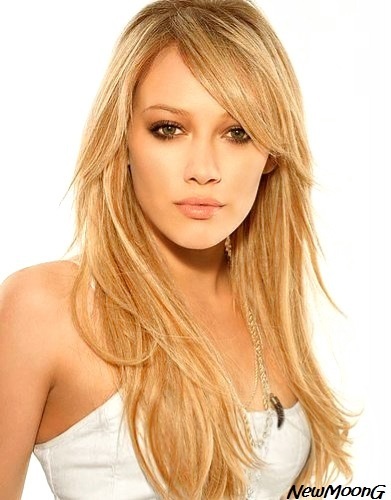
Morgan MacQuill - This new mom has a lot on her plate: from fleeing an abusive husband, meeting a family she never knew existed, moving to another country, and finding out she's a witch. To top it off, she meets her neighbor, Quinn, who happens to a glorified hottie, and together they have to fight a monster that is bent on world destruction! I imagine Hillary Duff playing this capable heroine and looking good while kicking evil's butt.


Quinton (Quinn) MacGreen - This guy has it all: amazing powers, good looks, an Irish castle he's restoring, and a job he loves (which just so happens to be a veterinarian). His life is seemingly perfect, until his new neighbor arrives from America. Although Quinn knows they are destined for each other, he fights falling in love with his scared, but gorgeous neighbor. But when an ancient Celtic monster returns to destroy everything he holds dear, they must work together to save the world. I imagine Chris Hemsworth could play the part well (minus the Thor hair), wearing a lab coat and holding an adorable puppy in his arms.


Irish Heart - Available at Amazon


Brigid MacQuill - The heartbroken (literally and figuratively), Irish healer may seem petite and fragile, but her resilience nearly matches her loyalty to her family. She's willing to fight and sacrifice everything she has to protect those she loves, and when it's her turn to face the ancient evil threatening Ireland, she rises to the occasion. I imagine Ginnifer Goodwin playing her, only with a coppery red hair and deep green eyes. 


Dermot Callaghan - This heart-breaker left Ireland and the girl he loved, for six years, before he figured out that he was running away from where he belonged. He returns, battle-scarred and weary, and has to fight alongside Brigid as she faces her greatest challenge yet. I imagine Hugh Jackman would play him nicely (though he needs to be a bit younger) and would have to wear some very drastic makeup to mimic the scars Dermot receives from an explosion in Iraq.


Irish Sight - Available at Amazon


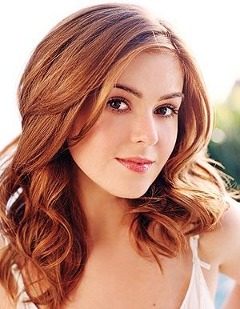
Margaret (Maggie) MacGreen - For the woman who can normally see everything before it happens, Maggie is thrown for a loop when she finds a man, half-dead, on the beach near her cottage. Turns out the man is a witch and a key character in the ongoing war against an ancient Celtic monster. This Irish beauty has to work through her own insecurities to stand by the handsome sailor she's falling in love with. I imagine this character being played by the stunning Isla Fisher (with the attitude that she really doesn't know how gorgeous she is).


Breandán MacKeet - Finding out that his parents aren't his parents at all, was just the first of many surprises for this sea-faring hottie, but learning of his real mother's rape by a monster, and his resulting birth, nearly broke him. When his boat sinks in the Atlantic ocean, Breandán wakes up to a beautiful redhead and no memory of who he is. Maggie helps him piece together his past and fights alongside him as the monster that created him attempts to destroy the world. I imagine this brooding and guilt-ridden character to be played by the super sexy Gerard Butler (the only additions I'd make to this otherwise perfect man would be stormy grey eyes and a scar from his lip to his nose)


Irish Truth - coming in June 2015


Erin Tatyana Whitney - This gypsy beauty comes to Ireland at the invitation of her university room-mate, Maggie MacGreen. Unknown to her friends in Ireland, she is the final piece of the puzzle that will change the tide of battle against the ancient evil that's been trying to destroy the world the past three years. She brings with her a book, passed to her at the death of her grandmother, that holds great secrets that will change everything. She meets the surly and sexy Ian MacQuill, and sparks fly between them. I imagine this character played by the vivacious and regal Julianna Margulies.


Ian MacQuill - This cool and brooding barrister is used to denying things: he denied the power he was born with, he denied the truth to his family, he can certainly deny his attraction to the dark and mysterious Erin Whitney. But when a deadly foe from his past, the very reason he turned from his powers, returns and teams up with the ultimate mythical monster, Ian must let go of his past, and his guilt, to embrace who he really is and admit his feelings for the Russian beauty. I imagine this forlorn hero played by Karl Urban (with bright green eyes like his twin, Brigid) sans the perpetual scowl from Judge Dredd. 


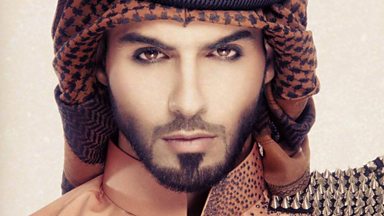
Fomóirí - Throughout the saga, the ultimate, evil, bad-guy is a Celtic monster returning to Ireland after being exiled by Celtic gods over 3000 years ago. A sea-dweller, this monster's true form is a cross between a lizard and a man; slimy, grotesque and deformed. As the ultimate shapeshifter, the Fomóirí often changes forms to an extremely handsome, olive-skinned man. He may look like a total hottie, but this guy is not someone you would want to mess with. This truly evil baddie would be played by Omar Borkan Al Gala only with bright red eyes and blackened fangs (he's a super-bad-guy, so he needs to keep the creep-tacular level high!)


Thursday, December 19, 2013

Naming Your Characters - Thursdays with the Author


Before I get going with this post I'd like to wish you all a very Merry Christmas! The big day is only 6 days away! My kids are literally bouncing off the walls waiting for Santa to come. My favorite part of the holidays is making it absolutely magical for my kids. My second favorite thing is being able to spend time with my family and in-laws. We always have a great time and the food is, to put it mildly, amazing. :) 
I hope you all have a great Christmas!

I'd also like to remind everyone that my next book, Irish Strength, The Irish Treasures Saga Book One, is being released January 1, 2014. It will be available through the CreateSpace store, Amazon and through bookstores and libraries. 


Now for the Thursdays with the Author post! ;)


Reader Question: 
When thinking of names for your characters, what inspires you? How do you come up with unique and original names for so many characters?


Answer: 
Names are hard. Sometimes even harder than writing the actual book.
When I started Dark Mountains, I was young, only 18, and I definitely hadn't seen much of the world. The majority of the book was written while I was pregnant with our first child and as we were waffling on names for our baby boy, I was doing the same thing with the characters in my book. Dark Mountains takes place in Eastern Kentucky so I had to use names that would fit the region as well as the characters. We named our son Colton (Cole for short) and I wanted to share his name with the hero of my book. Cole (in the book) is a young man who is very loyal, puts the well being of others above his own, sacrificed to serve his country, and married the woman he loved. I wanted my son to grow up with the same morals and character as the hero in my book, so I decided to keep their names the same. I have no idea if my son will appreciate this when he's older though! 

Another name I used was my mother's (Sheri). She is Cole's mom in the book. The only other name I settled on that had a direct link to my life was using Heinrich as the last name of the German doctor that takes care of Cole after he's injured in the war. Hopefully my brother-in-law doesn't mind the use of his surname but I couldn't resist since it needed to be a German sounding name and his is conveniently just that. ;)

In my next book, Irish Strength, the names were even harder. The majority of the book takes place in Ireland and names from other countries and cultures are extremely different than common names here in the heartland of the US. So not only did I have to find names that fit the culture and country, I wanted my names to mean something. 


Trace Your Gaelic Roots - Trace your Irish heritage and find out where your Irish surname originated from.

For example: In book one, Morgan (the modern version of Morrigan) is the heroine. She's fleeing from an abusive marriage and finds shelter and safety in Ireland with family she's never met. She discovers that she's actually a witch and a descendant of one of the first high kings of Ireland. Because of that heritage, she is pulled into a mythological war against an ancient Celtic monster. Morrigan means 'Great Queen' in Irish. In Celtic mythology, Morrigan was the goddess of war, death and fertility.

Also in book one, Quinn (short for Quinton), is also a witch and descendant of one of the original high kings. He is also next in line as head of his family. He is destined (with Morgan) to be the protector of one of the Irish treasures. Quinn means 'wise counsel' in Gaelic.

When writing fantasy, an author has much more freedom with names. Since you're making up the majority of the book, you can also make up the names. But at the same time, you have to be careful. A reader isn't going to enjoy taking five minutes to try and pronounce the name. Fantasy name builders tend to draw their inspiration from old names that are no longer used. Latin, Greek, Hebrew, Old English, Scandinavian, etc. Today we use the anglicized, easy-to-pronounce versions. Use the older versions of the name, even tweaking them a little. 

So some tips for naming your characters: 
(FYI these are just TIPS, not RULES)

1) Try to draw inspiration from the personality of your character

2) Names tend to have different meanings to different cultures. Check the meanings and find one that fits

3) Don't pull names from only ones familiar to you. Check out the top 100 names for specific countries, look up old-world languages, common names used hundreds or thousands of years ago, etc.

4) Don't go overboard with spelling and pronunciation. Readers hate not being able to say a name in their head, or read it a certain way through the whole book only to find the glossary in the back saying it was wrong. (Think Harry Potter: A lot of us were saying Hermione's name wrong until Goblet of Fire when she taught another character how to pronounce it.)

5) Names can always be changed in the editing process. If you're stuck and can't find a good fit, finish your novel with a generic name and go back and read through it. Look for the characteristics, attitude, physical attributes of each character throughout the book then find a name that fits.

6) Read other books from your genre. DON'T use the same names as another author, especially in the same genre.

7) If you're writing in a certain culture, country or time period, the names NEED to match where and when you're writing your story in. A LaKeesha isn't going to be a common name in Sweden. Agnes isn't going to be normal in the Caribbean. Su Ling isn't Canadian. The same goes with the time period. If you're writing historical romance names like Axel, Zahara, North, etc. are not names that would be used 200+ years ago.